
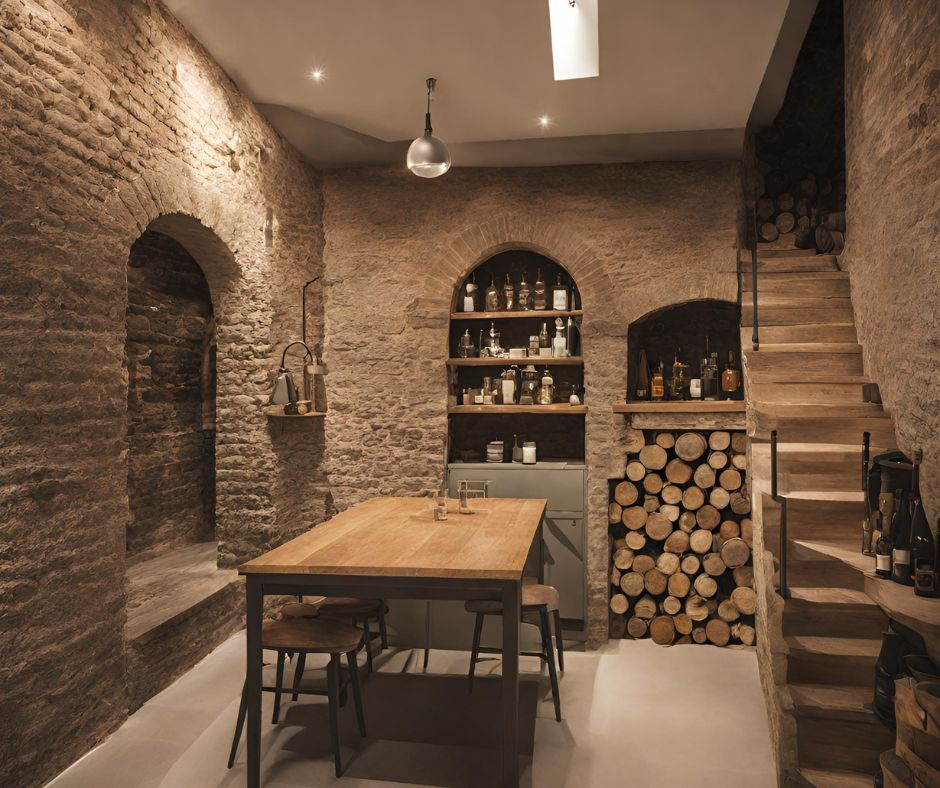
Understanding the distinction between a cellar and a basement is crucial for any homeowner, especially when considering a renovation project. PT Renovations, based in Faversham, sheds light on the key differences to help you make informed decisions for your property.
Understanding Basic Definitions
At first glance, basements and cellars may appear synonymous. However, delving deeper reveals significant distinctions which influence their function and renovation requirements.
- Definition of a Basement: A basement refers to a space below the main floor of a home, partially or entirely underground. Unlike other levels, a basement is often unfinished, offering a blank canvas for homeowners. It’s common to transform basements into living spaces, home offices, or entertainment rooms. With a proper renovation, a basement can become a highly functional and appealing extension of your home.
- Definition of a Cellar: A cellar, on the other hand, implies a purpose primarily for storage rather than living. Commonly, cellars house wine, preserves, or other perishables. They stay cool, making them ideal for storing items that require lower temperatures. Unlike basements, cellars often lack windows or have very small ones, meaning they receive little to no natural light.
Functional Implications
The functional differences between basements and cellars are pronounced, impacting how homeowners utilise these spaces.
- Utility and Renovation: The flexibility of basements makes them ripe for renovation projects. PT Renovations excels at converting these subterranean spaces into beautiful, functional areas, enhancing the value and comfort of your home. Conversely, cellars often have a single-use function. Yet, a well-executed renovation can transform a dreary cellar into a charming wine cellar or a well-organised storage area.
- Lighting and Ventilation: Basements, with their potential for larger windows, can benefit from natural light and ventilation. This is a crucial aspect to consider during renovation, as it impacts both aesthetics and functionality. Cellars typically require mechanical ventilation to maintain a cool environment, something that PT Renovations can seamlessly integrate into your space.
- Accessibility: Typically, basements have easier access than cellars. The renovation process may include improving the staircase or adding a separate entrance to enhance accessibility.
Legal and Structural Considerations
When planning a renovation, legal and structural considerations come to the forefront.
- Building Regulations: In Faversham, as in many parts of the UK, building regulations vary between basements and cellars. PT Renovations ensures all projects comply with local laws, making the renovation process smooth and hassle-free for homeowners.
- Structural Integrity: The structural integrity of your home is paramount. Renovating a basement or cellar requires careful assessment to ensure safety and longevity. PT Renovations boasts a team of experts adept at navigating the technical and structural challenges posed by subterranean renovations.
- Resale Value: A well-renovated basement can significantly boost your property’s resale value. While a cellar may not have the same impact, a tasteful renovation can still make your property more appealing to potential buyers.
The distinction between cellars and basements extends beyond mere terminology; it influences functionality, renovation prospects, and legal considerations. PT Renovations, with its rich experience in renovating subterranean spaces, stands ready to assist homeowners in Faversham in understanding and making the most of their below-ground spaces. Whether you aim to create a cosy living area in your basement or a stylish storage space in your cellar, PT Renovations is your go-to expert in transforming visions into reality.